Ep. 3 | What We Take For Granted and What We Will Not Give Up, with guest Nick Tigges
This week Martha Jean is joined by her friend and stand-up comedian Nick Tigges for a wide-ranging conversation about politics, government, economic precarity, and what we owe each other in a moment like this one. Nick has a bachelor's in political science from Emory University, a master's in public administration from Georgia State, and worked inside the Georgia Senate Budget Office before pivoting to stand-up comedy four years ago. He is one of the sharper people Martha Jean knows, and this conversation proves it.
The episode is structured a little differently than usual. Interview clips are woven together with Martha Jean's own commentary and analysis, so think of it less as a straight interview and more as a dialogue she gets to keep adding to after the fact.
Topics covered include European democratic socialism and what it actually means, why most people agree on the big problems but fight about the solutions, why local politics is where the real looting happens and why nobody is paying attention, the PFAS contamination crisis in North Georgia's water supply, the documented human rights abuses inside ICE detention facilities, the paradox of tolerance and why Nick says it is not actually a paradox, the banality of evil and what Hannah Arendt has to teach us about this moment, why niceness is not the same as being good, and Gene Metcalfe, the last living man who trained at Camp Toccoa and jumped into World War II.
Timestamps
0:00 - Three questions that frame the episode
0:17 - Introduction of Nick Tigges and format explanation
3:06 - Nick defines himself as a European leftist
3:11 - What European democratic socialism actually looks like, including Finland's proportional speeding fines
5:53 - Most people agree on the problems, the disagreements come in the solutions
7:08 - Why people disengage from local politics
11:07 - Martha Jean's DeKalb County boil water story
12:17 - Monologue: DeKalb County's crumbling water infrastructure, Cherokee County's cancer-linked contaminants, PFAS pollution from the North Georgia carpet industry, the EPA rollback, entropy and local government, manufactured culture war as distraction from corporate looting
23:24 - The paradox of tolerance is not actually a paradox
25:06 - The woman with the Trump sign at the bridge protest
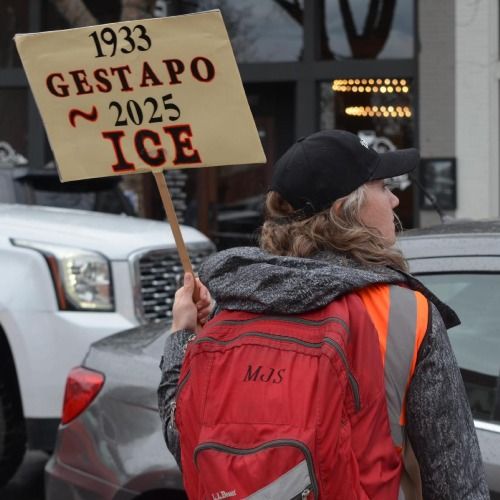
29:12 - Visiting Dachau, Nazi gas vans, ICE detention, and our collective tolerance for horror
34:07 - Monologue: Good intentions stopped being a defense, the case for confrontation over civility, Hannah Arendt and the banality of evil, documented ICE abuses, why social consequences matter
51:21 - Nick on the Georgia Senate Budget Office, $19 billion in Medicaid funds, and consultant overspending
53:54 - Camp Toccoa, Operation Living the Legacy, and Gene Metcalfe
57:33 - What happens when you tell people you do stand-up comedy
57:55 - How to follow Nick
58:32 - Outro
Links and Resources
Follow Nick Tigges on Instagram and TikTok: https://www.instagram.com/the_nicktigges
Gene Metcalfe's book, Left for Dead at Nijmegen by Marcus Nannini: https://bookshop.org/p/books/left-for-dead-at-nijmegen-the-true-story-of-an-american-paratrooper-in-world-war-ii-marcus-a-nannini/e52e108d169780ef
NGA CAN mockery and confrontation blog post referenced in the episode: https://www.ngacan.org/post/why-mockery-and-meanness-are-essential-in-the-fight-against-fascism
Senator Jon Ossoff's ICE detention human rights abuse report: https://www.ossoff.senate.gov/wp-content/uploads/2026/01/260114_Report_Patterns_v5.pdf
ACLU report on Fort Bliss detention facility: https://www.aclu.org/news/immigrants-rights/detained-immigrants-detail-physical-abuse-and-inhumane-conditions-at-largest-immigration-detention-center-in-the-u-s
EWG tap water database for Cherokee County: https://www.ewg.org/tapwater/system.php?pws=GA0570002
EWG tap water database for Woodstock: https://www.ewg.org/tapwater/system.php?pws=GA0570003
Decaturish reporting on DeKalb County's $4.4 billion water infrastructure crisis: https://decaturish.com/2024/05/replacing-all-of-dekalb-countys-aging-water-pipes-will-cost-4-4-billion/
North Georgia Community Action Network: https://www.ngacan.org
Cherokee County write-in candidate recruitment page: https://www.ngacan.org/cherokee-write-in-2026
Help a Neighbor mutual aid fund: https://www.ngacan.org/help-a-neighbor
About Schindler's Gist
Schindler's Gist is a progressive political podcast hosted by Martha Jean Schindler and Tyler Kluth, based in Georgia and Wisconsin. New episodes drop weekly (mostly). Find us wherever you listen to podcasts.
Transcript
What does it mean to call yourself a leftist in North Georgia? What do you do when someone shows up to your protest with a Trump sign and plants themselves right in the middle of your group? And what can a 104-year-old man who jumped out of a plane into Nazi-occupied France tell us about the moment we're living in now?
::This is some of what we get into today, and I think you're gonna wanna stick around for all of it. This is episode three of Schindler's Gist, and Tyler and I are still figuring out what this show is. One thing I know is that I want guests, real conversations with interesting people about things that actually matter. So this week, since Tyler is at the beach having a wonderful time with his family, and I'm honestly quite jealous because I love the beach, I called in a friend. This episode is gonna look a little different from our usual format. What you are going to hear is conversation with my guest woven together with some of my own commentary and reaction. Think of it less as a straight interview and more as a dialogue that I get to keep adding to after the fact. I liked how it turned out, and I think you will too. My guest is my friend Nick Tigges. Nick and I have known each other for many years. We met when we were both working as personal trainers, and what has kept us close is that our lives have rhymed in ways that are a bit unusual.
::Both of us went to graduate school, and neither of us ended up doing what that degree was supposed to lead us toward. I got an MBA, and Nick got a master's in public administration. Both of us have worked very hard to find our footing, to figure out what we actually care about and how to build something around that, even when the path was not obvious and even when it took longer than expected.
::Nick is now a stand-up comedian, which is definitely one of the braver pivots a man can make in life. He also has a background in Georgia State politics that gives him credibility to talk about what's happening in the country right now. He's analytical and interesting, and he does not pull punches, and I think you're gonna like him. The term, and he also said, "Wow, beliefs like, um,
::any, any intolerant belief to fester, then out of, out of a desire to tolerate it, well, we should let the Nazis do their thing. You know, it's okay for them to hate the Jews and hate Black people, and it's okay for the Christian nationalists to think women are only good if they're, you know, giving birth to babies and making me sandwiches in the kitchen. Um, that's fine. Uh,
::we should allow them to do that." If you, if you allow that to happen, then eventually they may become in power and will create an intolerant, a universally intolerant world. So you have to say, "No, that's not okay."
::Yeah.
::"Go, go back to whatever
::sewage you crawled out of." We, you know, we've, we've been talking about politics, um, Tyler and I. And Tyler is a libertarian, and he actually asked me, "How would you define yourself?" He was like, "Well, what, what, you know, on the scale, where does N- Nick fall?" And I was like, I actually don't know where Nick would fall, where you fall. And I often-
::European leftist
::... You're a European leftist.
::European leftist, yes.
::Tell me what that means.
::So Bernie Sanders, everyone thinks that Bernie Sanders is, like, a left-wing politician. I mean, in the US, that could certainly be argued for, but in Europe he would pretty much be
::either direct center or just barely center-left. Like, when we're talking, you know,
::European left, we're talking about, you know, full-on democratic socialism. Like, you know, g- like gove- government-run healthcare. We're talking about, you know, um, subsidized, you know, drug programs to get people off of drugs. We're talking about, you know, uh, we're talking about, you know, housing policies where, you know, like, affordable housing, you know, subsidized housing. We're talking about, you know, in Finland, I don't know if they still have it because they have a new right-wing government that came in recently that repealed some of the other, um, domestic social programs they had. But in Finland, for example, you know, if you got a speeding ticket, uh, they would fine you proportionally to your income. So, like-
::Mm-hmm
::... for example, like, say some, uh, some, uh, some surgeon, you know, speeds down the highway in his Porsche, gets a ticket for, like, 200 bucks, you know, he's just gonna pay that off easily. Whereas, you know, you or I get a ticket, you know, that's gonna cause us to have to cut back on some of our spending for the month.
::Right.
::So what they do, what they did in Finland, a- again, I don't know if they still do this, but, you know, they would
::give you a ticket proportional to your salary. So basically it was a lot more fair that way.
::Mm-hmm.
::I was kind of reading-
::Yeah, so a lot, a lot more... Yeah, so a lot more, a lot more... I'm a, I'm a huge fan of domestic social programs, domestic spending. Um, you know, all, all the things that c- you know, can make
::the average person, you know, actually be able to live a really good, decent life.
::Mm-hmm. I probably align with you more, I think. Don't you think so?
::Yes.
::From an outsider looking in. Although Tyler and I, I don't know how much of this is, like, I can be very argumentative with assholes online, but when I'm talking to people in person, um, and I, and I know that they are,
::um, well-intentioned, I, I'm not as aggressive. [laughs] So I don't know how much of it is that we haven't gotten on topics where we really disagree. I don't know if libertarianism in some ways has more overlap with more leftist things, but there, there's definitely some things that we've, we've come up with and I'm like, hmm, that wouldn't be my viewpoint. But just in the two episodes we've done so far, we've, we've mostly agreed on stuff, which I think is kind of interesting.
::And the thing is, like, when it comes to
::the majority of people in the US, and I mean, the majority of people worldwide, and the majority of... um, you know, political ideologies, like we can agree on a lot of things. What differs between ideologies and people is how best to go about solving the issues that we face.
::Mm-hmm.
::Like, you know, we agree that, you know, our educational system sucks. You know, the military is way too overfunded. Like, you know-
::Mm-hmm
::... you know, we have terrible healthcare. Like, you know, our infrastructure's crumbling, but the real differences show in
::how we want to fix those problems. Like, with education, you know,
::uh, basically on the right you have basically the privatization of schools, whereas, you know-
::Mm-hmm
::... the left, like, you know, we actually wanna fund the schools better and, you know, actually pay teachers what they worth, s- what they're worth. So, like, yeah, it's like, it's like, it's like, you know, we agree there's a problem, but where, where the disagreements come is how do we best fix this.
::Have you been paying attention to any local races? Do you plan to vote in the primaries that are coming up May 19th?
::Yes, I am planning to vote in the primaries. As far as
::the candidates that are on the ballot, I haven't really done my research yet. Um, and that's,
::that's, that's kind of my biggest weakness in terms of politics, which is also funny 'cause I worked for local politics in the-
::Mm-hmm
::... in the Georgia General Assembly. Um,
::like I'll pay attention to a lot of the national stuff, but like
::with a lot of local issues, like, you know, of course, you know, I do pay attention to local issues, but like a lot of that flies under my radar just 'cause I'm a lot more focused on national, international news.
::Why do you think that is, even for people... Because one of the things that, you know, I still lead a group up here, um, and for, for the listeners at home, Nick and I haven't hung out in a while because we live, I don't know, 45 minutes away, and in Atlanta-
::Yeah, it's about-
::... traffic it's a freaking nightmare.
::Yep.
::Um, [laughs] but, uh, I still lead the group up here, and we've been trying to get people to be engaged locally, and that's also something that Tyler and I have been talking about, is, is how hard it is to get people to be engaged locally. Why do you think it is so difficult?
::I mean, I'm gonna be honest, I have no clue. Like, you know, I'm sure there's sci- there's gotta be, like, scientific studies or, like,
::other-
::You, you would think. Yeah.
::Yeah, you... I mean, I have, I have no idea about this, so I, I am just spitballing this, so all the listeners, take what I'm saying with a massive grain of salt.
::I think
::one reason that, you know, could be a factor is that
::you're, like a lot of people, maybe me, like, you know, local stuff is
::kinda... It just seems like we're already around and we're doing such, so much local stuff that we're just like, "Oh, you know what? Like, this is what we see day to day. Like, you know, let's focus on the national stuff or the international stuff or the big stuff." Like, the small stuff kind of just feels,
::it feels, it feels like you're not as invested in it, even though you are.
::Mm-hmm.
::But, yeah, it's like, it's just I can't,
::I can't, I can't really explain it. Like, it's-
::It's, like, taken for granted. It's that-
::Yeah, y- you take it, yeah, you take it for-
::Yeah
::... you take it for granted, and I think,
::I think, you know, like it's just if you, say you, you know, you've lived in Atlanta all your life. Like, you know, I live in Atlanta, like I go around, like this is my town, it's cool, but at the same time, I'm just like, "You know what?
::I'm already experiencing this. I've already, you know, walked around outside. Let's, you know, look at national, international," 'cause like that stuff-
::Yeah, I wonder-
::... it's like, it's out of the way
::... we, we get more que- like, I see, feel like I see more questions from people who just moved somewhere bec- and, and so then you cannot take anything for granted if you just move, relocated. You're trying to get your footing, whereas, like... A- and maybe,
::yeah, so you've, you've grown up here. It's in the zeitgeist. Like, you've seen newspaper headlines for your entire life related to this stuff. It can feel a little bit more like it's just working and you don't need to be involved.
::Yeah. That's, that, that's what it feels like. It's like, oh, it's just, you know, the garbage truck goes by. Okay, cool, like, stuff's going well, whereas, you know-
::Mm-hmm
::... you see all the stuff go-
::There's no problem, there's no problem, you don't need to fix it. And problems sell.
::Yeah.
::And if all of the media is going to be, um, most media is going to be incentivized to go towards national issues because if there's any element of, um,
::selling to an audience, and I'm using, like, big picture selling, like persuasion, influence, whatever, you usually are gonna get the most bang for your buck if you're talking about the broadest, most universally-
::Yes
::... universally applicable topic ever. And-
::Until the, until the garbage trucks stop working.
::Right.
::Then, yeah, then, then you're gonna hear about it.
::Yeah.
::But, you know, stuff's, yeah.
::Or, or the, like, when I lived in, when I lived in DeKalb County,
::we... I, I remember one time I had, like, I thought I had, like, a stomach bug. I just was feeling really sick and gross. Not gonna get into too many details.
::Yeah.
::And then I found out from somebody else that there was a boil warning, and that I had not heard about, so I was just drinking. And I would, I drank a ton of water, I cooked with a ton of water.
::Ooh.
::So I was just, I was just, like, consuming nasty, nasty, nasty water, and it was truly making me sick, and I didn't, I didn't hear about it because... And I, and I actually tried to... This was when I was still kind of trying to pay attention, like I, I, I don't know how I just missed it.
::Mm. It was a nurse who told me, so maybe,
::maybe that was part of the reason why she knew. Maybe more people didn't know about it. But we were having, I feel like we were having boil warnings all the time over there. As what I just described, getting sick from contaminated tap water and not even knowing there was a boil warning, wasn't a quirk or a fluke. That was life living in DeKalb County, Georgia.One of the largest counties in the Georgia metro area.
::I lived there for 10 years, and the blow water advisories, unfortunately, were not rare events. They were just a reoccurring feature of life. And it turns out there's a very specific reason for that. DeKalb County's water system was built starting in 1909, and the main treatment plant went in around 1942. The county's population today is nearly nine times larger than it was when that infrastructure was installed. DeKalb averages about three water main breaks per day, which is more than double the regional median. And just last year, a single break on Claremont Road knocked out water service to 8,800 households and more than 20,000 residents, all because of a cast iron pipe installed in 1941.
::A county commissioner said at the time, quote, these things are common occurrences at this point because the water and sewer infrastructure is so battered, you fix one problem, two more pop up. And it will cost $4.4 billion to replace all the pipes that will be 70 years old by 2050. $4.4 billion for just one county in just one state, just for the pipes. And yet we have billions of dollars to send to Argentina, billions of dollars to send to
::Israel, and billions of dollars to wage a pointless war in Iran.
::Now I live in Woodstock in Cherokee County, which is about as far as you can get politically from DeKalb and still be in the Atlanta metro. And you might think the water situation is better out here. You know, this is a fast-growing, relatively affluent suburban county. People move here for the good schools and the clean air, supposedly, and the small town feel.
::But independent testing of Cherokee County water has found multiple contaminants above health guidelines, including, bear with me here, bromodichloromethane, bromodichloromethane, chloroform, and hexavalent chromium. Those are all cancer-causing, or cancer-linked is probably a better term, chemicals. The water technically passes federal legal standards. But here's the thing. Legal limits for contaminants in tap water have not been updated in almost 20 years. And we know that the Trump administration has been trying to loosen all kinds of EPA standards. So quite frankly, I don't feel like we can trust federal legal standards going forward until we get rid of the Trump regime. Passing a legal test that was written in 2005 does not mean your water is safe. It means your water is legal. As a reminder, slavery used to be legal, and it still sucked. Being safe and being legal, being good and being legal, being the right thing and being the legal thing are two very different things.
::And this is not just a Cherokee County problem. It's not just an Atlanta problem. It's not just a Georgia problem. Ten North Georgia communities have been found to have PFAS chemicals in their drinking water at higher levels than the EPA declares safe. PFAS, just in case you're not familiar, are what scientists call forever chemicals. They're man-made compounds that don't break down in the environment or in your body. They just accumulate over time. As a reminder, I think mercury also accumulates over time. Lead, I thought, accumulated over time. Maybe I'm wrong about that. But accumulating over time is not a super great thing.
::And they're linked to kidney cancer, breast cancer, testicular cancer, thyroid disease, decreased immune response, and problems with infant development. And if you're a millennial like me, you may have heard about how many millennials are getting weird cancers all of a sudden.
::It's a thing that's happening.
::So where is all of this coming from? A lot of this pollution traces back upstream. In Dalton, Georgia, which is the epicenter of U.S. carpet manufacturing, industrial waste containing PFAS has leached into the Conasauga River, which flows into the Oostanaula. The Etowah River, which is Cherokee County's primary water source, flows right into that same system. The carpet industry has been dumping its waste into North Georgia water supply for decades. And all of us living down here from Woodstock southward are downstream from it.
::In 2024, after years of litigation and advocacy, the EPA finally set new federal limits on PFAS in drinking water. It was called one of the most significant public health victories in a generation. And then by May 2025, the EPA signaled it would eliminate the maximum contaminant levels for four of the six regulated compound and push the compliance deadline from 2027 to 2031. So basically, again,
::2024, we still had
::Biden or a non-Trump administration. So we still had a somewhat functioning EPA. And then in 2025, May 2025, after the Trump regime was in place, the EPA kind of backed off of these protections. Hmm. I wonder why. For one thing, the carpet industry lobbied for these changes. And of course, the current administration delivered it because they don't give a flying fuck about people or keeping them alive. They only care about making their buddies rich.
::And sometimes I think the cruelty is just the point. This is what I mean when I say local government matters. Clean water doesn't maintain itself. It requires oversight, investment, regulation, and people who are paying attention and showing up to fight for it. The moment those things disappear, the moment everyone assumes someone else is handling it, the hole gets deeper. And by the time most people notice it, it is already very, very hard to fix.There's a concept called entropy, and it's the idea that systems naturally tend toward disorder, all systems. Left alone, things fall apart, and that applies to water systems, to roads, to schools, to democratic institutions. You cannot elect decent people once and then walk away, leaving everything to chance. You have to stay engaged. You have to keep showing up. You, we, all of us, because the people who want to let things fall apart or who profit from the falling apart, they never stop showing up. They are always there, and if you are not, they win by default.
::So why don't people engage locally? Well, Nick said it really well. You take it for granted. The water runs, the lights work. You stop thinking about it. But I also think that the disagreements that do exist are more manufactured than real. Most people across this country, across this state, agree on the fundamentals: clean water, good schools, roads that work, healthcare that does not bankrupt you or kill you. The disagreements come in the how, as Nick said, and I don't think that fight is 100% organic. I think a lot of that fight, and there's data s- to support this that we can explore another time, is manufactured by people who benefit from the confusion. Because the moment we stop fighting each other over the how, we might start asking who is actually responsible for the mess we are in and making them pay for it.
::And here's what I can't get past. Here's what keeps me up at night. While the Etowah River is being poisoned by carpet industry waste, while DeKalb County's pipes are crumbling and people are drinking contaminated water and getting sick and not even knowing why, while the EPA rolls back the protections that took decades of grassroots fighting to win, while all of that happening is happening, we are being asked to spend our energy arguing about whether trans people have the right to ef- fucking exist.
::I'm gonna be clear about this. Trans people exist. They have always existed. They deserve to live their lives in peace, free from persecution, free from legislation designed to make them miserable and afraid. That is not up for debate as far as I'm concerned. And immigrants, let me be clear about that too. Yet another argument that's weaponized against us, designed to divide us. Immigrants have rights. It's in the fucking Constitution. They are human beings. The things the Trump regime is doing to immigrant communities right now, the raids, the deportations, the family separations, the detention camps, the rapes, the murders inside those concentration camps are evil. I do not use that word lightly. Evil is the right word. But here's the thing.
::I want you to think about this.
::While we are being manipulated into screaming at each other about those things that shouldn't even really be up for debate if we had any moral clarity as a society, and they are important things, real things, things worth fighting for, while that fight is consuming all of our oxygen, billionaires and corporations are looting this country in broad daylight. They are poisoning your water and calling it legal [laughs]. They are defunding your schools and calling it choice. Yay. They are dismantling the regulatory agencies that stand between their profit margins and your family's health, and they are doing it while you are stress watching Netflix and arguing with strangers on Facebook about the things that people are, who are doing the looting deliberately put in front of you to keep you distracted.
::I'm not saying the culture war issues are fake. I'm saying they are a tool. They are a very effective tool for keeping working people, people who actually have shared interests, at each other's throats instead of looking up and seeing who is picking their pockets. It is the oldest trick in the book, and it works. It works because most people are exhausted.
::Most people are just trying to get through the day. Most people are not sitting around dreaming up ways to make their neighbors' lives harder. There are a couple of people on Facebook who I'm pretty sure are doing that, I've encountered them, but most people are not doing that.
::Most people are being manipulated into it by people who have billions of dollars or more riding on their continued distraction.
::So yes, fight for trans rights, fight for immigrant rights, fight for every human being who is persecuted by this regime, and also do not let that fight be the only fight. Look at your water. Look at your school board. Look at who is on your county commission and what they are doing with your tax dollars and whose interests they are actually serving because that is where the looting happens, quietly, locally, and while they think nobody is watching.
::The people doing this are counting on you watching, not watching, I mean.
::Do not give them that.
::For now, let's get back to my conversation with Nick. After World War II, a researcher coined a term and he also said y- you cannot allow, if we allow intolerance, a universally tolerant-
::It's a para- it's paradox of tolerance
::... paradox of tolerance, yeah.
::Which fun- funny, it's not, it shouldn't be a paradox. Tolerance is a social contract. If someone is being intolerant of you, you are under no obligation to be tolerant back. Like, the problem is the paradox of the paradox of tolerance is that he got it wrong. It's not a paradox. Tolerance is a social contract.
::Mm-hmm.
::If you are, if someone is being intolerant to you, you are under no obligation to be tolerant back to them. Like, that's the mistake people make. It's not paradox, it's a social contract.
::Yes. And, and that's, and that was his point. He was like it, the... And, and, and part of his argument was we,
::i- if you allow beliefs like, um,Any, any intolerant belief to fester than
::out of, out of a desire to tolerate it. Well, we should let the Nazis do their thing. You know, it's okay for them to hate the Jews and hate Black people, and it's okay for the Christian nationalists to think women are only good if they're, you know, giving birth to babies and making me sandwiches in the kitchen. Um, that's fine. Uh,
::we should allow them to do that. If you, if you allow that to happen, then eventually they may become in power and will create an intolerant, a universally intolerant world. So you have to say, "No, that's not okay."
::Yeah.
::Go, go back to whatever
::sewage you crawled out of. Um,
::and, and, and it's really hard to figure out where to draw the line in a world where... I think, I think we... Part of what got us here too is so many people just not wanting to make waves, not wanting to cause problems, and so the bigger bully wins. Um, when whenever you are
::disincentivized to stand up and, and be loud when there's an injustice-
::It's 'cause in school they'd expel you if you stood up to the bully, even if the bully punched you, so-
::That is true
::... that, that ingrained the wrong lessons into a generation of people.
::Yeah. That is, that is true. Um, I think-
::Like, if you're gonna, if you're gonna get the same punishment as the bully then, for standing up for yourself, then why bother?
::We had a protest the other day, and we were on a bridge.
::Well, okay, so we were at... We've started doing events where we're kind of at a pretty main intersection where there's a bridge going over the highway, because you can get a lot of visibility if you put a sign up on that bridge, right? Like, you're getting all the people going back and forth through the city on that lane. And then you also, particularly if you're doing this during rush hour, you're getting a ton of traffic that's getting on and off the exit at that intersection. So we have people at that intersection, we have people on the bridge. And I was h- helping, um, our bridge guy the other day, so I was, you know, pretty far away from the intersection, being in the center of the bridge. Um,
::and
::I noticed a new person down, that, or a person whose body, clothing, signage I didn't recognize. A lot of times I can kind of recognize people even from far away, and I was like, "Oh, cool. We have a new person." And then I got closer
::and
::a- after, after the event was over, I, we were tidying up and I got close, and it was a woman with a pro-Trump sign.
::And I was like... I'm, I'm curious about what you think about this, 'cause I was,
::I was ups- I was so upset, and still am upset thinking about it, 'cause I'm like, you know, she could've been anywhere else. It is technically legally her right to protest wherever she wants, right? We don't have a permit. She can be there. Um, that's fine. But she chose to get in amongst us when she could've gone anywhere else. Um,
::it, to me, can create mixed messages when, when they intermingle with us. It's clearly designed to harass and intimidate us,
::and I think she needs to feel [laughs] bad. I think she ne- needs to be made to feel bad, not made to feel allowed to be there. But the people who were at that corner were a little bit of the more kumbaya types, and so they, it was important to them to allow her to do, express herself. I think you have the legal right to say whatever you want, but I have the legal right to tell you that you're trash and you're gross and you pr- support pedophiles, and all the terrible things that you're, you know, all the children that you're causing to suffer with your support, da, da, da, da, da.
::Just be like the apathetic fish when, um, in that SpongeBob meme where, uh, Patrick's trying to mop the floor and he's like, "Hey pal, did you blow in from stupid town?"
::[laughs] Apathetic fish? I need to find this.
::Yeah. One of the, the, the apathetic fish. I'm not sure which one. They act- So they actually have names in the SpongeBob universe, but I don't remember what his name is. But it's, it's the meme where I think Patrick is, like, mopping the floor with, like, the opposite side of the mop handle, and the guy just comes up to him and he's like, "Hey pal, did you blow in from stupid town?"
::[laughs]
::[laughs]
::Did you see the SpongeBob movie? We saw that.
::Uh, the newest one I have not.
::My husband and I went to Germany a couple years ago. We went to Dachau.
::Mm.
::And for some reason, I was reading something... We were, I, I remember being on the bus coming back from having just been to the concentration camp, which is an experience on its own. But then I was reading something about Dachau and found
::writing that I had not heard of before. Oh, I hate when it decides that I'm giving thumbs up-
::Yes
::... and then it just decides to do that. Um-
::Like you're most definitely not doing it for this context
::No, I'm not doing it... Dachau. [laughs] Yeah.
::Indeed.
::Concentration camps, guys. We're all tied. Um, n- but
::I s- I stumbled across some writing about the vans that the Nazis used to gas,
::um, children, and they were connected, I think, to the exhaust pipes. The k-
::Yeah
::... kids would die from inhaling e- exhaust.
::Yeah. It was carbon, it was carbon monoxide poisoning.
::And I was reading an account of the vans pulling up to a orphanage that already had... You know, these kids were already orphans because their parents had been taken off by the government. It was a-Catholic orphanage, I believe, because it s- said there were nuns and the nuns knew what was happening to the kids. And so some of the nuns were screaming and try- crying and trying not to let the kids get thrown in the van. And the, the eyewitness accounts were just of them shoving a bunch of children into the van, and the sounds they heard and everything. And I remember it was a beauti- it was weird to go see a concentration camp on such a beautiful day. It was a beautiful day. The weather was amazing. The trees were green. It was summer, and
::everything was like this verdant green with blue skies. And here I am on this nice vacation, this nice trip, and on this nice safe bus ride reading about children being gassed like
::worse than dogs, treated worse than dogs. And, and I think about stuff like that a lot when,
::when I think about what ICE has already done that nobody has stood up for. And
::we, we, we have such high tolerance for absolute
::horrors, and I don't, I don't understand it. I don't understand how...
::They had those vans relatively early on in the process. They decided, I think, I think it was partly optics, and partly they weren't as efficient as other things, so they stopped using them.
::Yeah.
::But they were able to continue. People didn't riot in the streets and
::burn shit to the ground in opposition to this.
::'Cause the problem is once you, once you cross, like people, people are scared to do that 'cause once you cross that threshold, there's no turning back.
::So people won't-
::That is true
::... so people won't do it until absolutely every last option is exhausted because like, like for example, like say you go decide like, fuck ICE, and you decide, you know, you end up, you know, beating them up or killing one in the street. Like, once you do that, there's no going back. You now have-
::Yeah
::... the full weight of ICE and the US government coming down on you. Like once-
::Yeah
::... you do that, there's no going back, and a lot of people aren't ready to do that or wouldn't be ready to do that until, you know, all other options are exhausted or they have-
::Yeah
::... no other choice. That's just the reality.
::Yeah. And, and as long as they have other people, as long as you can say, "Well, if I do that, other people will be harmed. If I'm, if I'm killed,
::what will happen to my children? What will happen to my family?"
::It's like, that just, yeah, that just died for nothing. Yeah.
::Yeah. Because we've seen, we've also seen that they can kill people and nothing will... There will be no consequence whatsoever.
::Yeah.
::If anything, they get rewarded for it.
::Yeah.
::Um, so that's another reason, [laughs] circle, to circle back to why I don't feel particularly tolerant of the average MAGA asshole in our area. Um, it's because I, I'm thinking about things like that. I'm not, you know, I said that logically I believe that there are some well-intentioned people who are still MAGA assholes. Um,
::I, I still don't understand it, uh, because I'm, eh, I'm thinking about the things that I believe they support that are
::real and quantifiable and documented. [upbeat music] So I said that I genuinely believe that some Trump supporters started out with good intentions, that they mean to be good people, that they were sold something, that they were lied to. Rationally and logically, I do believe that.
::Emotionally, I struggle with this because good intentions stopped being a defense a long time ago. The evidence of what the Trump regime is doing is right there. It is documented. It is quantifiable. And at some point, staying on board with MAGA anyway is not being misled. It means that you're making a choice,
::and that's why I really struggle with messages of tolerance.
::We mentioned the paradox of tolerance, and, uh, Nick said that it is not a paradox, that it's a social contract. Now, this might sound like splitting hairs because we were talking about someone's specific theory called the paradox of tolerance, but Nick's point,
::uh, I believe is true.
::Tolerance is a social contract.
::You cannot tolerate intolerance because intolerance violates the social contract. It voids it. You, we can only tolerate other tolerant beings.
::What seems complicated is that we've been trained to treat tolerance and, and niceness as a moral position,
::to treat keeping the peace, getting along with people who are intolerant, giving the KKK believers a pass, giving, uh, the MAGA folks a pass to be their weird asshole self just as long as it's not at my house a pass, is taking the high road. And we're told that if we just turn the other cheek, stay calm and civil, keep doing the right thing, eventually the other side is gonna see that they're wrong and, you know, wake up, and
::I don't know, stop trying to outlaw our votes or whatever thing of the week it is that they've been told that they need to do with their hate.I used to believe in the kumbaya position a lot more than I do now. What I learned through many different experiences with intolerant people and with bullies is that the people who scream the loudest about civility are almost never the ones getting hurt by incivility. Usually these people are comfortable and their comfort requires that nobody gets too loud about what's actually happening.
::I believe in getting loud. There's a historical and psychological case for confrontation that gets buried under all the pearl clutching about tone. Oh, you're not being nice enough. Oh, you're being mean. Oh, you shouldn't have used that word. That's a bad word.
::See, fascists depend on being taken seriously. They wrap themselves in flags, they project strength, they demand deference, and one of the most effective things you can do is refuse to give it to them. Not out of pettiness, but out of strategy.
::For example, when activists in Germany wanted to counter a neo-Nazi march, they turned it into a charity walk-a-thon and raised money for anti-extremism causes for every meter the Nazis walked. Anti-KKK activists have been showing up with tubas and clown suits for decades. And Charlie Chaplin made Hitler a buffoon on film in 1940 while Hitler was still in power. These were all examples of ridicule. Ridicule dismantles the aura of authority in a way that reasoned debate just can't because reasoned debate grants the premise that the position you're arguing against is valid and worth taking seriously. And the thing about fascism is that it's truly invalid. It is an absolute batshit, gaslighting, illogical perspective.
::Now, I want to talk about Hannah Arendt because I think about her studies a lot. She was a Jewish philosopher who fled Nazi Germany and later covered the trial of Adolf Eichmann, who was one of the chief architects of the Holocaust.
::What Hannah found when she looked at Adolf Eichmann, he was this man who helped organize the murder of millions. She didn't see a monster, not on the outside. He looked like just an ordinary bureaucrat. He was organized, efficient, followed orders, went home at the end of the day, probably seemed to his neighbors like a perfectly normal, nice man.
::And she called this phenomenon the banality of evil. It's the idea that some of the worst atrocities in human history aren't carried out by obvious demons. They don't have little horns and fangs dripping venom with, you know, bloody nails like some horror movie. The worst atrocities are carried out by seemingly ordinary people who have stopped thinking, who decided that going along and following the system, not making waves, just doing what they were told, doing what the people in power said to do, doing what made them a paycheck, doing what everybody else seemed to be getting,
::going along to get along to do, doing things that didn't seem to have too much punishment. You know, nobody's making a fuss about it. I guess I can get along, get away with it. They decided that that was easier than doing the right thing.
::The guards at Auschwitz,
::some of them were absolute sociopaths, psychos, but many of them had families, made their kids laugh, helped their neighbors, and then went to work and committed some of the worst atrocities known to mankind.
::So when someone wants me to be nicer to Trump supporters,
::I
::want to know
::where the line is at publicly accepting people who have violated
::the social contract.
::Because
::how many children have to be separated from their mothers before you're allowed to be publicly angry at the people who voted for the man who made that all happen? How bad does it have to get before I can make you uncomfortable for doing that?
::For being a Nazi? For putting kids in concentration camps?
::Being nice is not the same as being good. Nice is a performance. Nice is what you do at the dinner party so everyone stays comfortable. It has nothing to do with whether you're a decent human being who does the right thing even when it's hard. History is full of very nice people who have done monstrous things or stood by while monstrous things were done just because they didn't want to cause a scene.
::When evil becomes normalized, as it apparently has been in our society, when cruelty becomes policy, again, as it seems to have become, when the person in the room saying, hey, wait guys, this isn't okay, is the one getting called an asshole, that's me, then being that person is the morally correct choice.
::None of us asked to be put in that position, but we're all here. And now we have to do the hard thing of doing the morally correct choice and being obnoxious about it.
::There's a difference between being mean and cruel that matters when we're talking about how we respond to our Nazis of today, the MAGAs.
::Cruelty is deliberate and enjoys suffering. It strips people of their humanity. Calling someone out loudly and publicly for supporting cruelty is not the same category of thing. Calling someone an asshole for continuing to support the MAGA regime still acknowledges them as a person. Assholes are people. They're just assholes.It is rude to call them assholes. I would argue that it is not dehumanizing. The dehumanization is what's happening in the camps. The dehumanization is making people live in a place where they don't see the sun for forever without due process. It's making them live in a concrete room with
::wire fencing without a blanket, without a bed, without the lights being turned off, eating food with worms in it, maybe with water on the floor,
::maybe getting sexually assaulted and beaten and harassed constantly,
::maybe getting killed.
::That's dehumanization.
::And that brings me back to the woman on the bridge.
::She wasn't just a person I disagreed with. She wasn't just an uncomfortable presence I had to tolerate. That woman was someone who chose to walk into a space that our community had set up shop in,
::a protest against a regime that is actively harming people, and she decided to use that protest as a platform to express her support for that regime. She was co-opting our work to endorse a man who is almost certainly a rapist, almost certainly a pedophile, and one who is 100% certainly causing immense, documented, ongoing harm to human beings. That woman made a choice to be there. She made a choice to interject, and I don't accept that choice. I do not accept her presence as something I'm required to make space for. The social contract doesn't require me to smile at someone who is using my own space to celebrate the thing I am fighting against. The kumbaya contingent let them stay, and I understand that impulse, and I believe it is their right and privilege to do what they think is right.
::I don't share that belief, and it's also my right and privilege to do what I think is right.
::Here's what's actually happening i- not as a metaphor, not as political rhetoric, but as documented fact, and this is why I think it is time for us to set aside politeness and niceness and start making these MAGA folks uncomfortable in public.
::Senator Jon Ossoff's office has recorded over 1,037 credible reports of human rights abuses in ICE detention since January 2025. Now, his report is actually kind of old, and th- his report also only included things that were absolutely concretely verifiable. It doesn't include a lot of stuff that is hearsay, um, has a lot of evidence, but we can't 100% prove it. It is stuff that is just, you know, absolutely bulletproof if you try to argue with it. So that means there's way more bad stuff happening than what he recorded. He recorded 44 cases of family separation, including mothers separated from breastfeeding infants. Thank you, pro-life family party or whatever the fuck you call yourselves these days. 206 cases of medical neglect, leading in some cases to life-threatening injuries. 26 cases of mistreatment of pregnant women. Again, party of family values. 40 cases of mistreatment of children. Ah, party of family values. Yeah, yeah. Fucking pro-life. 88 cases of physical and sexual abuse. That jives with what I know about the Republican Party.
::2025 was the deadliest year for people in ICE custody in over two decades, and 2026 is already well on its way to be worse.
::As of the time I recorded this, I had documented 14 deaths in the first few months of the year, 14 deaths that 100% were attributable to ICE and also were things that they were not able to hide. They had to admit it. So just imagine what else is going on that we don't know about. At Fort Bliss, the largest ICE detention facility in the country, which was built on the site of a former Japanese internment camp... Yay, we love internment camps. Couldn't, couldn't get rid of the internment camps. Had to reuse it years later. The ACLU documented beatings, sexual abuse, medical neglect, and systemic intimidation to coerce self-deportation. They basically tortured people till they wanted to self-deport. A detained teenager was beaten so badly he was hospitalized, and they know that the guards literally crushed his testicles while he was restrained. There were lots of reports of this happening to other people who were detained, but this was a case where they absolutely knew for sure that's what happened. And this facility still passed an ICE inspection. It was a case of, "Well, we investigated ourselves and found that we had done nothing wrong, so we're gonna keep doing it."
::A 55-year-old Cuban father of four named Geraldo Lunas Campos died there in January. Witnesses swore under penalty of perjury that guards handcuffed and shackled him, forced him into solitary confinement, and that he repeatedly said he could not breathe before he died.
::The county medical examiner ruled it a homicide, and ICE disputed it, and ICE is now deporting the witnesses. Again, we investigated ourselves. Turns out we did nothing wrong, guys. It's all fine.
::Nothing to see here.
::ICE has been trying to expand. Now, in recent weeks, a lot of that expansion has been stopped. Good. But they've been trying to build football field... Not even build. Co-opt warehouses, which are not made for humans, into... Oh, my God. The, the one in Social Circle, I believe, held 18 to 20 football field size, sizes, just on, on a ground floor to put people in. And, and it wasn't...Able to support anything like the hygienic needs, the water, the, the toilet needs of these people.
::And fortunately, that's been paused for a little bit, but that's what ICE wants to do. That's what the Trump regime wants to do. They want to build concentration camps that clearly are built to kill people, not to hold them for safe, temporary, comfortable periods of time. No. These are kill centers,
::death camps, and that's what this woman on the bridge was endorsing. That's what this woman
::w- who was waving her Trump sign around in invading our, our protest was saying that she wanted to support more. That's also what your neighbor with your Confederate flag is endorsing. That's what the well-intentioned Trump voter is endorsing, whether they know it or not. And that's why I told Nick that these people need to feel social consequences. Not violence. I am not supporting violence. Words, dirty looks, social shunning, that is not violence. It is still a very powerful tool for, uh, getting people to stop doing certain things,
::and I believe in it as a tool.
::We shouldn't commit physical harm against these people, but they should not get to move through their communities
::projecting and being seen and treated as perfectly nice, normal neighbors while they cheerlead for the atrocities that the Trump regime is supporting.
::The nice people of history have a lot to answer for.
::You need to understand that nice is not the same as moral,
::that being nice is not always making the moral choice.
::Avoiding conflict is not the same as having integrity and acting with integrity, and tolerating intolerance, as Nick said, is not only not required by the social contract, it is a betrayal of it.
::It's... This is what I believe, and it's what I'm gonna keep saying out loud, and if it costs me some followers, if it makes some people not want to stand next to me at some of our protests, that's fine.
::They have to do what they believe is right, and I have to do what I believe is right. And apparently, I have to tell you about it on a podcast. So let's get back to Nick. Oh, I wanted to ask you, did you find any waste, fraud, and abuse while you were working for the budget office?
::I didn't.
::[laughs]
::No, every... I did...
::What I did find is that
::the Georgia legislature spends way too much on consultants.
::Mm-hmm.
::It's not waste, fraud, and abuse, but at the same time, I'm like, do you really need to hire a consultant to tell you what you already know?
::What are the... What are... Is it... But business is the same way. The business world, um, will often hire consultants, uh, to b- do exactly that, tell you what you already know, because sometimes that's the only way to persuade other people that it has to be done. And, and it is... I, I think that is hugely wasteful that-
::Yeah
::... that you can't just bring evidence to someone and say, "Here's why we should do it." It has to... You have to have this whole song and dance. Um-
::Yeah
::... but
::so what, what do the consultants do that you're n- Like, are-
::I-
::... were you privy to that?
::I was not privy to that. I just saw that they spent however much money on consultants from Deloitte or, you know-
::Mm-hmm
::... KPMG or something like that. I did not see what... Basically what I had to go through is I had to match, um... Basically
::there were two spreadsheets, and I had to compare
::what they said they spent on-
::Mm-hmm
::... and what was actually spent.
::Ooh.
::Like, I had to make sure that all those numbers lined up.
::Got it.
::So basically you took, you took one, you put it over the other, and it was the exact same numbers. Like when you're-
::And, and what happened if it wasn't, if it didn't match?
::Well, then I would highlight it or I'd flag it and be like, "Okay, let's, let's check this out." And then, you know, it turns out, like, it was actually for something else down the line, and they just typed it in wrong. So it, it, it got confusing. So I was like, "No, no, no, that's not that one. That's actually-
::Mm-hmm
::... this one."
::Mm-hmm.
::So no, actually when I looked at all my stuff, like, all the I's were dotted and the T's were crossed.
::Hmm.
::Like, you know, they were actually, they were actually pretty, they were pretty good at, you know, keeping everything in order.
::So I got to do something kinda cool. Um, I went to this event. Let me see if I can pull up... Do you know where...
::This is gonna be great audio for the audience, just dead silence while I try to think of what I'm talking about.
::Um, Toccoa.
::Yeah.
::The camp at Currahee.
::Yeah, I've heard of that.
::D- did... Have you ever seen the show Band of Brothers?
::Yes.
::So this is... I met one of the Band of Brothers, one of the guys. Um, he's the last living person, I cannot remember his last name, I feel really disrespectful for that, but he's the last living person who trained in Toccoa and then also,
::um,
::was a participant in the Battle of Normandy. He jumped out of a plane.
::Um,
::and let me find the description of the event.
::It's called All Airborne Battalion: Operation Living the Legacy.
::So what they do is,
::uh, they have a bunch of paratroopers, some trained, some not-And they jump out of a C-47 that actually served during World War II. So let me just read, read to you from this paper that I found that I sent a picture of to my brother. "Who? All airborne battalion cadre and prospective paratroopers. What? Operation Living the Legacy III Airborne School. When? 22nd of March to the 29th of March, 2026. Where? Camp Toccoa, Georgia. Why? To honor the paratroopers who trained at Camp Toccoa, jumped into the air operations Overlord and Market Garden, and the 25th anniversary of the HBO miniseries Band of Brothers. Airframe, C-47 Placid Lassie of the Tunison Foundation." The foundation, I found out, that's... It's basically a living museum, so the foundation takes care of it, maintains it, travels with it.
::"The aircraft served during World War II during operations Overlord, Market Garden, Repulse, and Varsity. Additional events, World War II wounded warrior and other veterans engagements, night at the Ritz Theater, release of the Camp Toccoa beer, and of course, going up Currahee Mountain, going three miles up and three mi- miles down." And then it says, "Uniform, student's choice of tactical uniform or sport clothing. Tops must be long sleeve and polycotton ripstop equivalent clothing is recommended. Purchase of your own jump helmet is highly recommended." And then some of the people were reena- w- had, were reenactors, so they were wearing some of the same uniforms that were worn during World War II, um, because that's, that's what they participate. And it was, it was really, really interesting, really cool. The poor people who are actually jumping are staying in the barracks. [laughs] So they're, they're actually having the, an experience very similar to what everyone would have had back then. Um, but it was so cool. I'll send you pictures. I should have thought to send them to you. I for- I forgot about that 'cause I think you'd really enjoy it. Um, I know somebody who knows somebody who knows somebody, and that's how I was able to go, but it was really, really neat. And the, the one remaining guy that I met, he's 104, and is just... He won the genetic lottery 'cause this guy is, is still in such good shape. His mind's really sharp, um, just doing so well, and, and it, it, it was really, really cool. So I'll send you some photos.
::Awesome. I'd love to see them.
::Yeah.
::Um, do people ask you to be funny a lot? Do they tell you to be funny?
::Oh, my God, whenever I, whenever I say I do stand-up comedy, people are like, "Tell a joke." I'm like, "I'm not your fucking dog."
::No, that's why, you notice I'm not doing that to you. [laughs]
::No, I'm like, "No, I'll tell, I'll tell you a joke when you buy a ticket to one of my shows."
::Right. Right. Yeah. Yeah. All right, so Nick, what did you want to talk about that we didn't get to talk about?
::Um, I think we covered all the bases. Um,
::I guess the last thing I'd like to add is, um,
::you know, you can follow me on Instagram if you wanna see some political rant stories, see some slop content humor, and some show updates. I'm on Instagram and TikTok @the_nicktigges. Again, the_nicktigges.
::We need to spell Nick Tigges because I feel like-
::You're, you're right, I do
::... you have such a last name, people don't know how to spell it.
::You're right, I do. So N-I-C-K. So my last name is T-I-G-G-E-S.
::[outro music] That was my conversation with Nick Tigges. You can follow him on Instagram and TikTok @the_nicktigges, and Tigges is spelled T-I-double G-E-S.
::He's going to post show updates there when he has them. Also, the veteran I mentioned, Gene Metcalf, the last living man who trained at Camp Toccoa and jumped into World War II, has a book written about him called Left for Dead at Nimigan, I think that's how you pronounce it, by Marcus Nannini. I'll link to it in the show notes, and you can tell me how to pronounce it.
::Here's the thing that connects all this last section for me. Nick will not tell you a joke on demand because he knows who he is, and he's not gonna give it away for free. Gene Metcalf stood in front of Heinrich Himmler and did the same thing. Name, rank, serial number was all he got. Two completely different situations, but one principle. You know who you are, you know what you will not surrender, and nobody gets to take that from you by just asking or even demanding. That's what I want to leave you with.
::Thanks for listening. Tyler should be back next week. Take care of each other. [outro music]